

In Elkhart County, good takes shape when residents and officials plan, communicate, and coordinate as one.
Building trails means connecting one spot to another with a path, but first, you need people to connect with each other in human ways.
In both the town of Middlebury and the city of Goshen, groups of citizens are showing up to help town and city officials and the Pumpkinvine Trails Coalition to plan, communicate, and coordinate efforts to grow the trail network in Elkhart County.
More Walkable, More Rideable, More Home
In Middlebury, trails have been part of the town’s structure for 25 years. John McKee recalls early conversations about the value of trails as the Pumpkinvine Nature Trail was being built through town. He had moved from Minnesota and was a fan of trails from his experience there. In Middlebury, he met resistance stemming from fear of what such a pathway could bring to a town. When they built the first section near Main Street around 2000, that faded quickly. “Once people see a section, they are not as afraid of it,” he says.
The Pumpkinvine Nature Trail was voted Best Recreational Trail by the readers of USA Today.
Middlebury has become nationally known for the Pumpkinvine Trail, which, in 2026, was named the Best Recreational Trail in the United States by voters in USA Today’s 10Best contest. Thousands of people arrive as tourists, some to have their recreational vehicles serviced and others to ride the trail that links Goshen, Middlebury, and Shipshewana. They enjoy Krider Gardens with its quilt garden and its century-old trestle bridge. A trail counter in town has registered more than 1,000 users in a day. The Amish community and others rely on the trails to get places.
The town, aided by the park board’s Trails Committee, has been working for the last several years to connect the larger trail to other parts of town. The Ridge Run Trail connects the Pumpkinvine to the Das Dutchman Essenhaus complex. The town completed the $1.5 million River Mill Trail in 2025, connecting the town’s biggest park with some grant assistance from the Community Foundation. “We’re working at being a more walkable, more rideable, more accessible community,” says Barb Spice, chairwoman of the trails committee. “I’m really big right now on helping trails and parks be gathering places.”
During the COVID-19 pandemic, trail usage spiked in Middlebury, and town employees struggled to manage all the trash. Four or five trail users started reporting conditions as they walked, biked, or ran their regular routes. That led the town to establish a Trail Stewards program to formally leverage the eyes and hands of those caring for the trail, she says.
Over time, the young parents who use the trails with their families are also getting involved as stewards and in advocacy work. “We’ve been pretty intentional about trying to get the next generation invested and involved,” says Spice.
At the same time, Tom Enright, the parks department superintendent, says it feels as if the town has an older sibling helping with the trail-building. The Community Foundation offers steady support, ranging from funding for maintenance to guidance on dreaming and planning. Program Officer Ray Caldwell and the Pumpkinvine Trails Coalition staff are great partners and “a huge support,” Enright says, adding that most towns don’t have access to such assets and resources.
Bike-friendly and encouraging a culture
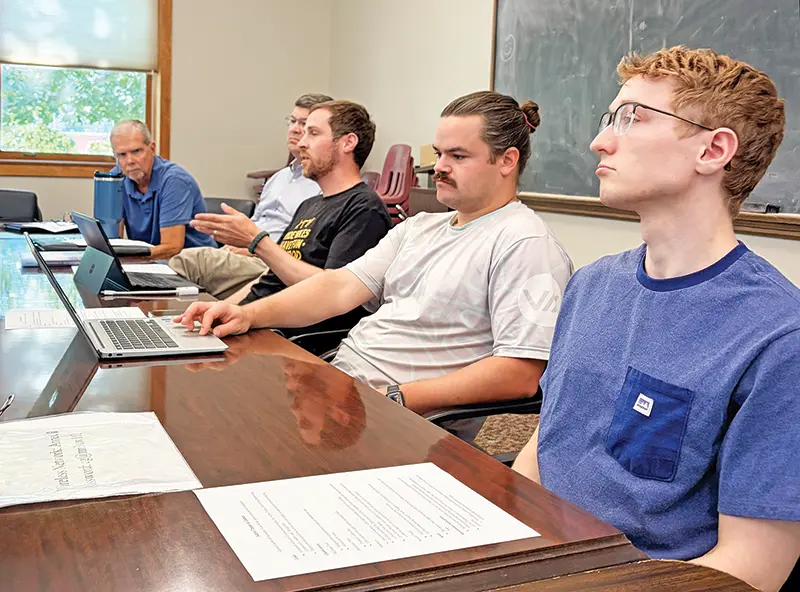
The Goshen advocacy group in action.
At a Goshen bike advocate group meeting with Dustin Sailor, the city engineer and director of public works, other city staff joined the conversation. Mayor Gina Leichty came into the room and sat down.
“It’s been really nice to hear that officials and the people in charge are thinking about this stuff like we are,” says Dirk Oyer, who has joined the group of people gathering monthly to discuss such issues.
Goshen was one of the first communities in Indiana to receive a state trail grant, which created the Mill Race Canal Trail. Connecting that trail and others is in the works, but it is taking time. Oyer, who often attends meetings of the Goshen Traffic Commission and the Indiana Department of Transportation, now understands what could happen over the coming decade based on the city’s plans.
When the city’s Redevelopment Commission was preparing to vote on a proposal to widen sidewalks and encourage outdoor dining in a “restaurant row” concept on Lincoln Avenue downtown, Nick Bouwman used his Substack newsletter/blog to spread the word. He writes “I Get Around: My Butt on a Bike” and is part of the advocacy group, and works at Lincoln Avenue Cycling.
“It’s really just about making the connections, you know, and keeping the communication lines open,” he says.
Watch “Building Trails and Changing Lives” about users of the network of trails in our community. »
Citizen advocates have been part of Goshen’s civic conversation on bicycling and trails over the years, but this new iteration, convened by the Community Foundation’s Pumpkinvine Trails Coalition, is taking a new form. “The quality and the caring, compassionate people that show up for these meetings, you’ll see a difference,” says Karla Beasley, assistant director of the trails coalition. “It’s bridging the gap of people who care about this, and we care about it, and the city cares about it.”
Sailor, who has been with the city for 22 years, appreciates having advocates who can help the community and shape what happens. Doing nothing is often the easiest thing for officials, and the advocacy group can help build community backing for initiatives such as Restaurant Row.
The slow pace of progress is sometimes hard for Bouwman, but he says knowing the city has a long-term vision helps. He pointed out that the city learned from a previous failed effort to make Lincoln Avenue more bike-friendly and used that experience to create this new version. He’s pitching neighborhood greenways to the advocacy group and city officials as a way to create bike routes with less automobile traffic without building more infrastructure. “Build for people. Accommodate cars,” he says of his preferred approach. “We’d be a little bit ahead of the curve and make it a destination point.”
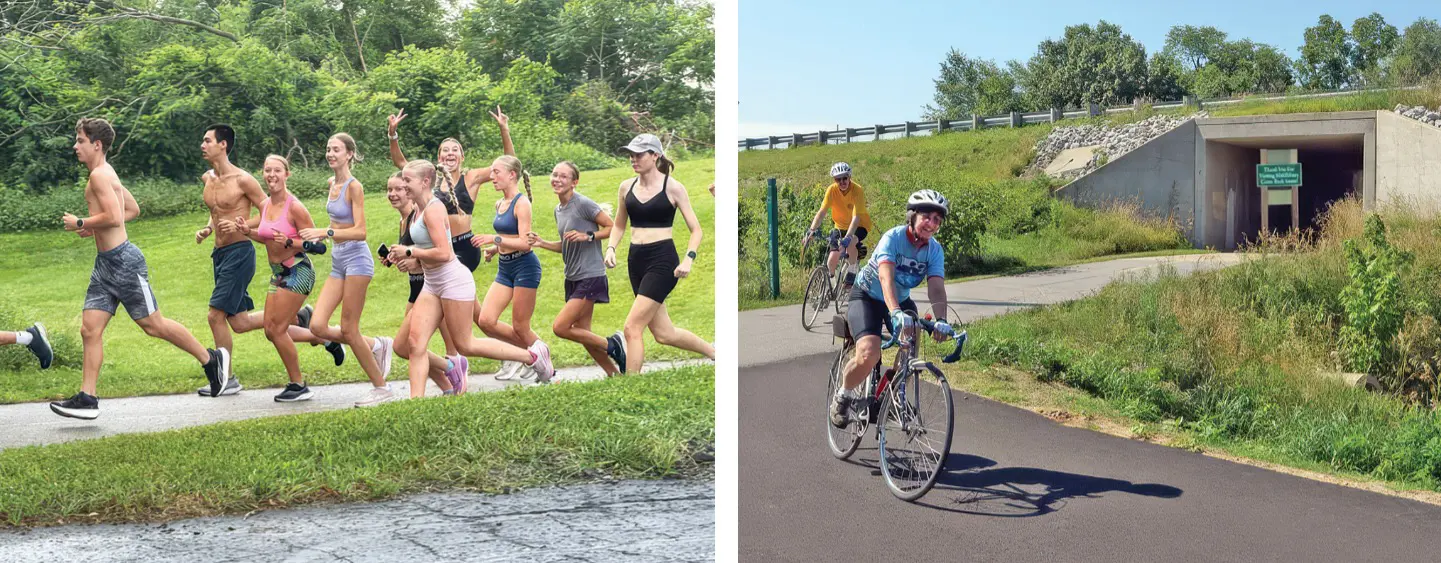
Sports teams and individuals use Elkhart County’s trails for exercise, recreation, and transportation.
While Bouwman tries to bike everywhere he can, Oyer has recently started biking more for transportation. Riding the streets has been better than expected, but he loves a good trail. “The trails, the Pumpkinvine especially, make Goshen a much better place to live,” he says.
Sailor would love to see the city advance in the League of American Bicyclists’ Bicycle Friendly Community designations, but it takes certified trainers, committee work, and programming. Bouwman is certified as a Smart Cycling trainer, so the work is progressing.
The communication lines are open. “I’ve just been really pleasantly surprised and happy about the work that you guys are doing,”
says Beasley.
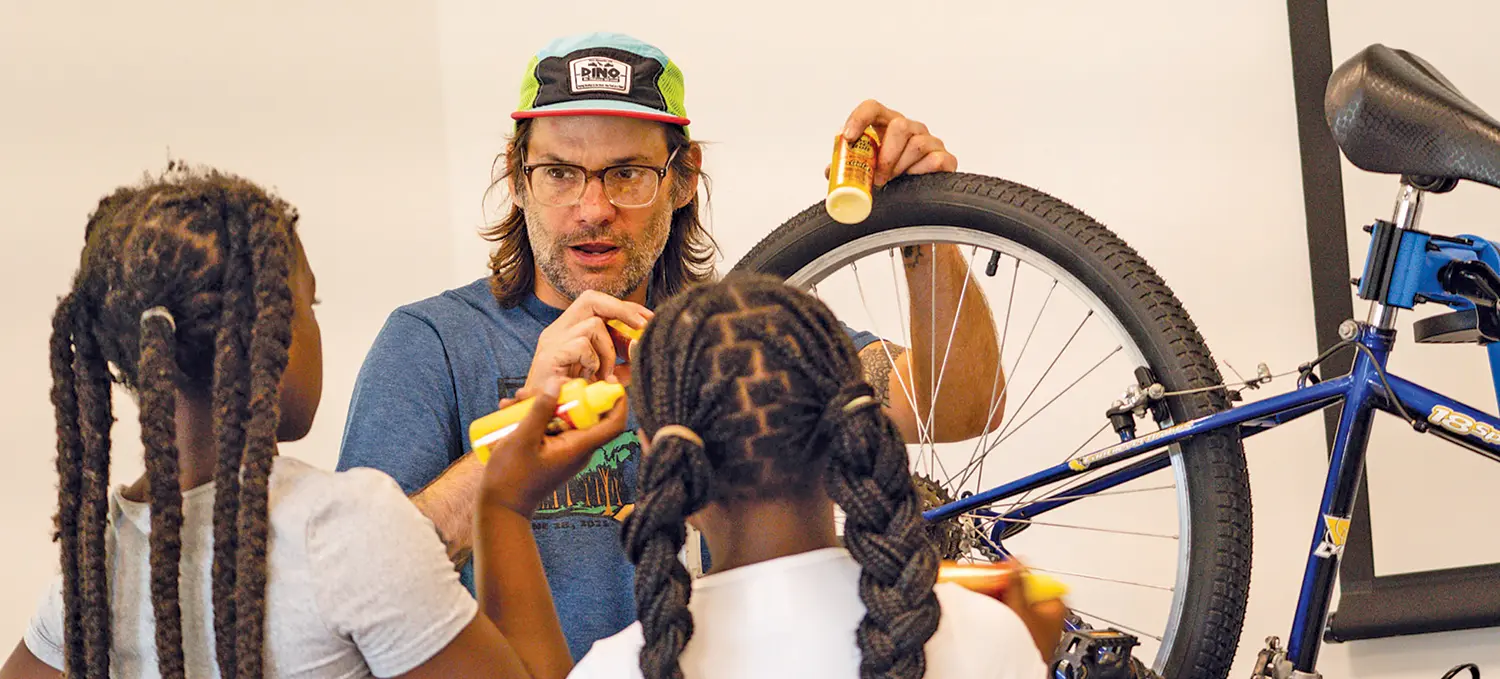
PTC is working to enhance the trail experiences for users of all ages.
Advice for Communities Just Starting Out
From Middlebury’s Trails Committee
- Find change advocates with a long-term vision who can clearly communicate the goals.
- There are more like-minded people out there than you think, but you have to ask the questions to find them.
- Expect an intergenerational mix. Young families and retirees want different things from a trail; a good trail can serve both.
- Recruit the next generation on purpose. People won’t surface on their own, and they won’t stick with it unless the work actually affects them.
- Find a municipal partner who will at least listen, ideally one willing to cooperate and help fund.
- A strong community foundation is a rare asset. If you have one, lean into it.
STORIES OF
IMPACT

Read our most recent Stories of Impact in our latest annual report (PDF).